Beauty as a Bridge
My work over the past five years grew out of a major heart surgery, and the long recovery that followed. That experience changed how I think about painting: not separate from that recovery, but part of it. After the surgery, painting was one of the only things I could still do, and it ended up saving me.
The work is deliberately optimistic, a quiet resistance to the crises that threaten to overwhelm us. That doesn’t mean looking away from difficulty. It means building something hopeful in full view of it.
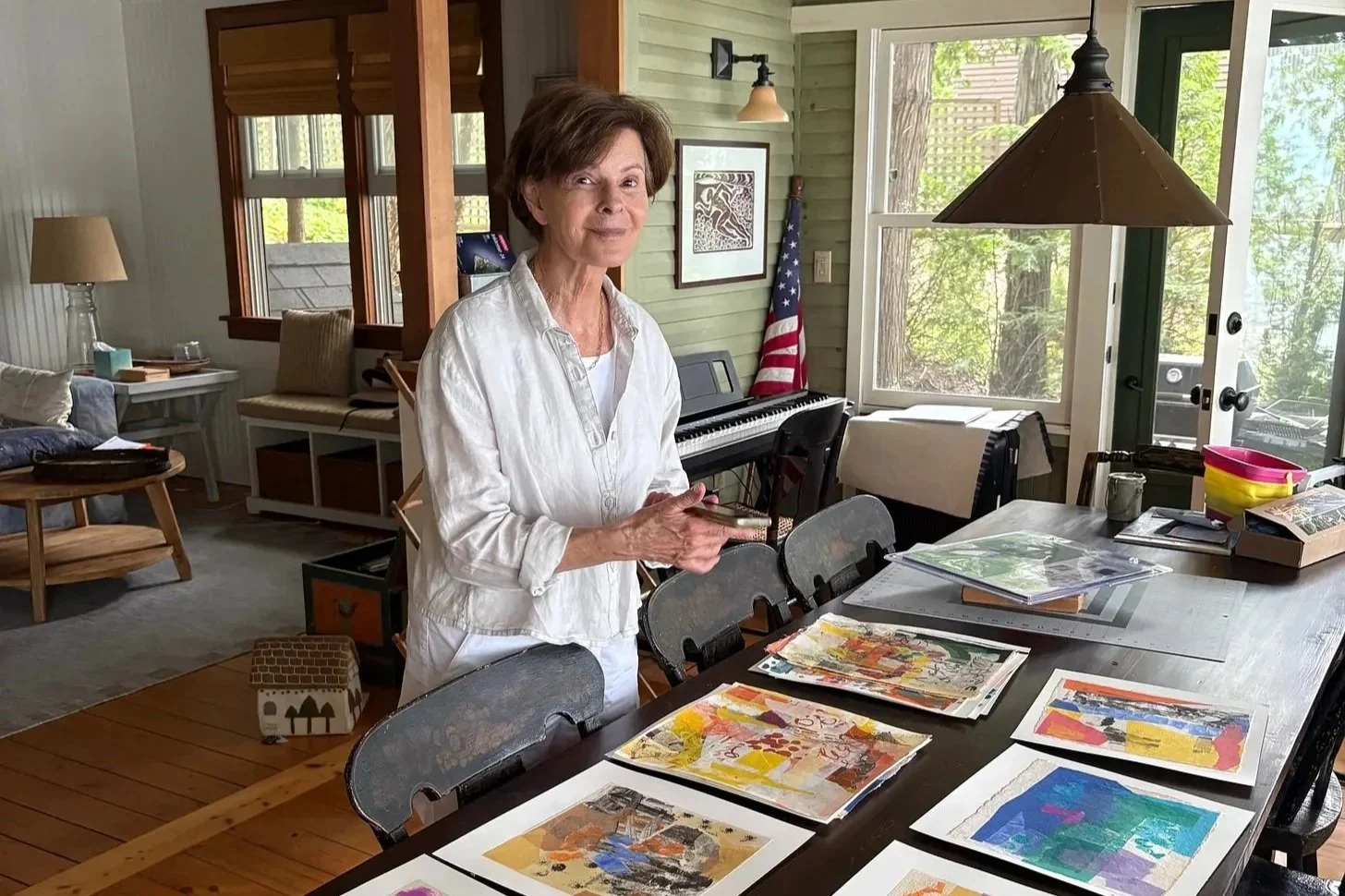
You can see that struggle right in the paint, built up in layers that hold onto the evidence rather than hide it. Color works the same way. I love mixing, creating charged combinations, not to please the eye, but to create real tension, the kind you feel in a raised voice or a held breath. Out of that comes something that evokes a world in chaos. But there’s always a light underneath the darkness. I’m after whatever survives beneath it.
That’s the paradox I work inside of: reclaiming a shared world while staying honest about how fractured it feels. Beauty isn’t decoration here. It’s a bridge, one of the few things left that can pull people back together.
The process is intuitive. I lay down line and shape, let colors sit next to each other until they start talking, and over time it builds into something rhythmic, a surface that’s clearly working hard to hold itself together.
The world in these paintings often feels unsteady, moving too fast to hold onto. But inside that motion, there’s usually a pull toward something quieter: a moment of stillness, of connection. That reaching is its own kind of recovery, the same one I started on years ago, except now it belongs to whoever’s standing in front of the painting, not just to me.